
Elephant facts: 14 things to know about African elephants
We may earn a commission if you book or shop through links on this page. You choose the provider that works best for you.
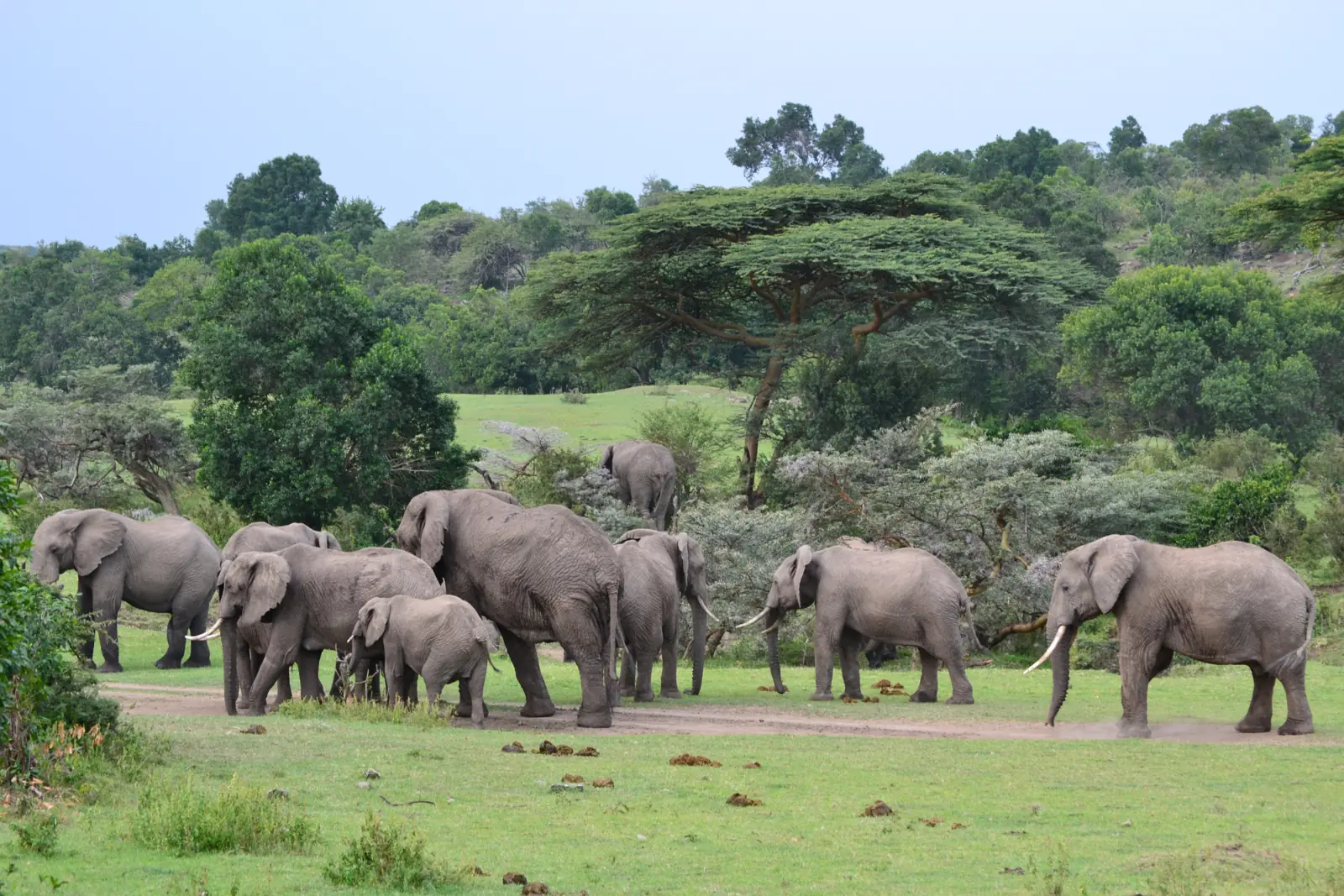
14 elephant facts
- They're the largest land animals on Earth. African savanna elephants are the biggest. Adult bulls commonly weigh around 5,000 to 6,000 kg and stand over 3 meters at the shoulder. Females are noticeably smaller.
- There are three living species. The African savanna elephant, the African forest elephant and the Asian elephant. The elephants you see on a Kenya safari are savanna elephants.
- Both African species are threatened. Since 2021 the IUCN Red List has classed the African savanna elephant as Endangered and the forest elephant as Critically Endangered, mainly because of poaching and habitat loss.
- Families are run by the oldest female. A herd is a group of related females and their young, led by a matriarch. Her memory of water sources, routes and danger helps the whole family survive droughts.
- Males leave home. Young bulls usually drift away from their birth family in their teens and spend time alone or in loose bachelor groups.
- Pregnancy lasts about 22 months. That's the longest of any mammal. A newborn calf weighs roughly 100 to 120 kg and can stand within an hour or so.
- Calves are raised by the whole family. Older sisters and aunts help guard, guide and comfort the youngest calves.
- The trunk is a nose and an upper lip. It has no bones and tens of thousands of muscle units. Elephants use it to breathe, smell, drink, grab food, greet each other and spray dust or water.
- They drink with their trunks, but not through them. An elephant sucks water partway up its trunk, then squirts it into its mouth.
- Tusks are teeth. They're elongated incisors that keep growing through life. Elephants use them to dig, strip bark and defend themselves. Most elephants favor one tusk, a bit like being left- or right-handed.
- They eat a huge amount. An adult can spend most of the day feeding and eat well over 100 kg of grass, leaves, bark and fruit.
- Big ears are air conditioners. African elephants flap their ears to cool the blood running through them. A bull spreading his ears wide at you is also a warning.
- They talk in sounds you can't hear. Much of their communication is low-frequency rumbles that can travel several kilometers, and they may pick up some vibrations through their feet.
- They react to their dead. Elephants often stop at the bones of other elephants and touch them with their trunks and feet. Researchers still debate what it means, but it's one of the most striking things in the animal world.
Elephant family life up close
The thing I didn't expect on our trip was how much elephants behave like a family you'd recognize. In the Maasai Mara we watched a herd move across the plains in a loose line, with the matriarch out front and the smallest calves tucked between the adults' legs. When the group stopped, the youngsters wandered and played, and an older female would rumble or nudge one back into place.
It helps to know how to read a herd's mood, and a good guide like ours, Polycarp, watches it closely. Relaxed elephants feed, flick their ears slowly and ignore you. Head shaking, ears spread wide, a raised trunk or a mock charge mean you're too close, and a good guide backs off right away. We also saw elephants in Laikipia, where the herds move between conservancies and private land.
| Behavior | What it usually means |
|---|---|
| Slow ear flapping, feeding | Relaxed, cooling down |
| Ears spread wide, head up | Alert or warning you off |
| Trunk raised and sniffing | Checking a scent, possibly you |
| Dust or mud bathing | Sun and insect protection |
| Trunk-to-mouth touching | Greeting or reassurance |
Why Tsavo's elephants are red
If you visit Tsavo, the first elephants you see may look like a different animal. They're the same savanna elephants, coated in Tsavo's red, iron-rich soil. Elephants dust-bathe and wallow to protect their skin from sun and biting insects, and in Tsavo that leaves them a rusty orange color. After a rain or a swim they turn gray again.
Tsavo East and Tsavo West together make up one of Kenya's largest protected areas, and the wider Tsavo ecosystem holds Kenya's biggest elephant population. We spent time in Tsavo West, including Mzima Springs, and the red elephants against the green bush and black lava rock are one of my favorite memories of the whole trip.
Kenya's most recent national wildlife census, released in late 2025, reported that elephant numbers had grown since the previous count. That's good news, but elephants still face poaching, drought and conflict with farmers as people and herds compete for land and water.
Visiting the elephant orphanage in Nairobi
One of the best mornings of our trip was at the Sheldrick Wildlife Trust's elephant nursery inside Nairobi National Park. The Trust rescues orphaned calves, many of them victims of poaching, drought or human conflict, and raises them until they can return to the wild, often in Tsavo.
During the public visit, keepers bring the young elephants out for their milk feed and mud bath while explaining each calf's story. Watching the little ones push each other into the mud and race for their bottles is pure joy, and hearing how many were found alone puts the whole safari in perspective.
Practical details, based on the Trust's visitor page at the time of writing (check before you go, since they can change):
- The public visit runs daily from 11am to 12 noon, except Christmas Day. Arrive early, because it doesn't start late for latecomers.
- You must book ahead by email. Same-day visits aren't possible, and bookings through third-party ticket sites aren't accepted.
- The entry donation is paid in cash on arrival, and you also pay Kenya Wildlife Service park entry fees for Nairobi National Park separately.
It fits easily into an arrival or departure day in Nairobi. Ask your operator to build it into the itinerary so the timing works with your flights.
Where to see elephants in Kenya
- Amboseli: famous for big-tusked elephants with Kilimanjaro in the background.
- Tsavo East and West: the red elephants and the largest population in the country.
- Maasai Mara: family herds on open grassland, easy to watch for long stretches.
- Laikipia and Samburu: drier northern country where herds move between conservancies.
For more on timing your trip around the best game viewing, see our guide to the best time to visit Kenya for safari, and read about the rest of the Big Five in Kenya. If you'd like help putting an elephant-heavy route together, a specialist such as Go2Africa (opens in a new tab) or a multi-day tour on TourRadar (opens in a new tab) can link Tsavo, Amboseli and the Mara. You can compare more options on our safari planning page.
Ready to plan your Kenya safari?
Compare safari specialists, multi-day tour marketplaces and local experiences, then choose the one that fits how you want to travel.
Discover Africa
Plan a tailor-made safari in East or Southern Africa with a Cape Town-based specialist team, including lodges, transfers and guided experiences.
Explore Discover Africa (opens in a new tab)Go2Africa
Work with an African safari specialist to plan a tailored itinerary, including accommodation, transfers, and experiences.
Explore Go2Africa (opens in a new tab)Safari.com
Browse safari destinations, lodges, and itineraries, then connect with a specialist to plan your trip.
Explore Safari.com (opens in a new tab)TourRadar
Compare organized multi-day safaris and tours from different operators, with itineraries and departure options to explore.
Compare safari tours (opens in a new tab)Viator
Explore game drives, day trips, and other experiences to add to your Africa itinerary. Check each listing for duration and operator details.
Explore safari experiences (opens in a new tab)Frequently asked questions
How much does an elephant weigh?
Adult African savanna bulls commonly weigh around 5,000 to 6,000 kg. Females are smaller, and newborn calves weigh roughly 100 to 120 kg.
Who leads an elephant herd?
The matriarch, usually the oldest female. The herd is made up of related females and their young, while adult males mostly live alone or in bachelor groups.
Why are Tsavo elephants red?
They dust-bathe and wallow in Tsavo's red, iron-rich soil, which coats their skin and protects it from sun and insects.
Are African elephants endangered?
Yes. The IUCN lists the African savanna elephant as Endangered and the African forest elephant as Critically Endangered.
Can you visit the elephant orphanage in Nairobi?
Yes. The Sheldrick Wildlife Trust nursery in Nairobi National Park opens to the public for one hour each day. Advance booking by email is required.
Keep reading
 Wildlife · October 28, 2026
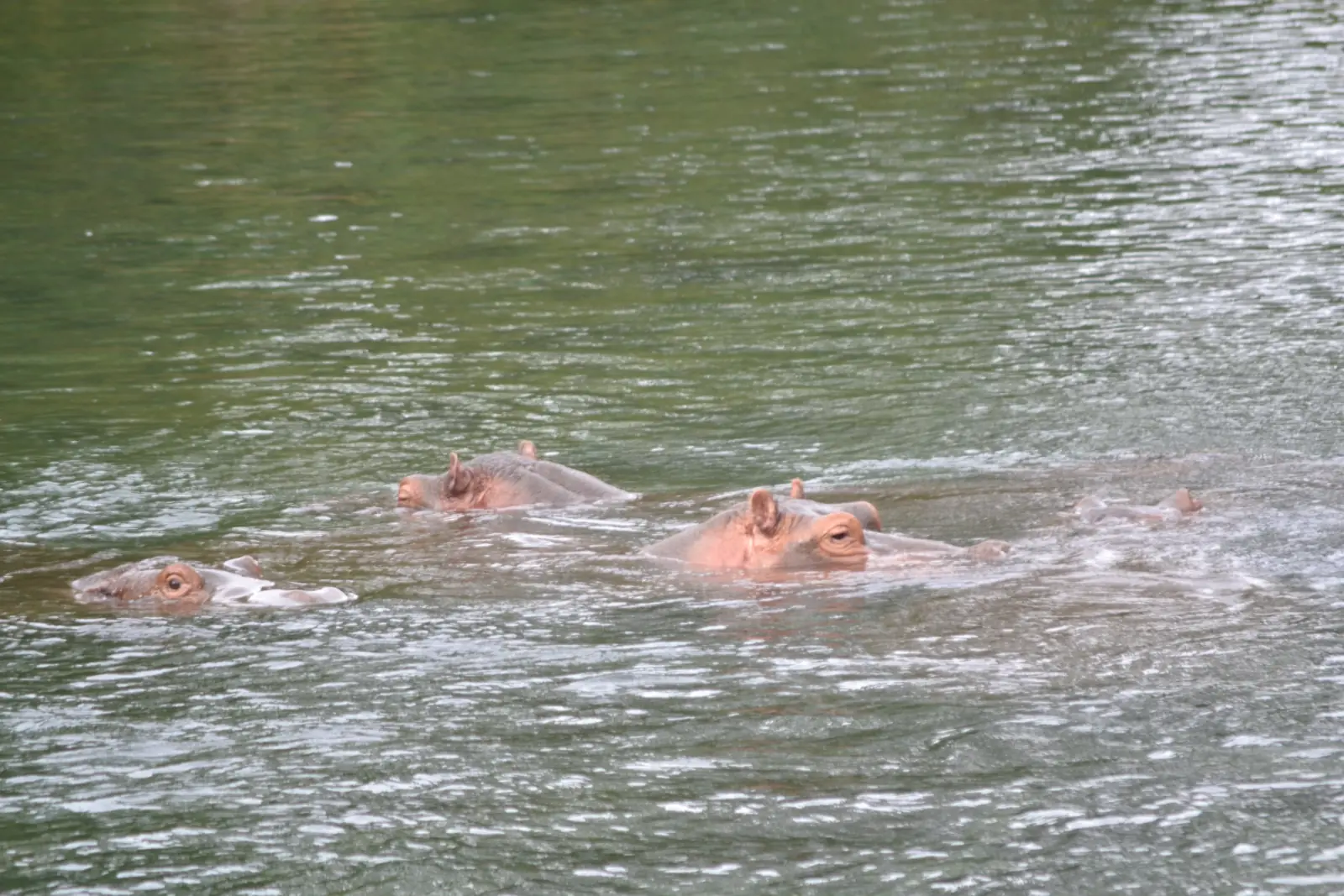
Hippo Facts
Surprising hippo facts: how much they weigh, why they can't swim, their "blood sweat", why they're so dangerous, and the best places to see hippos in Kenya.
 Wildlife · October 28, 2026
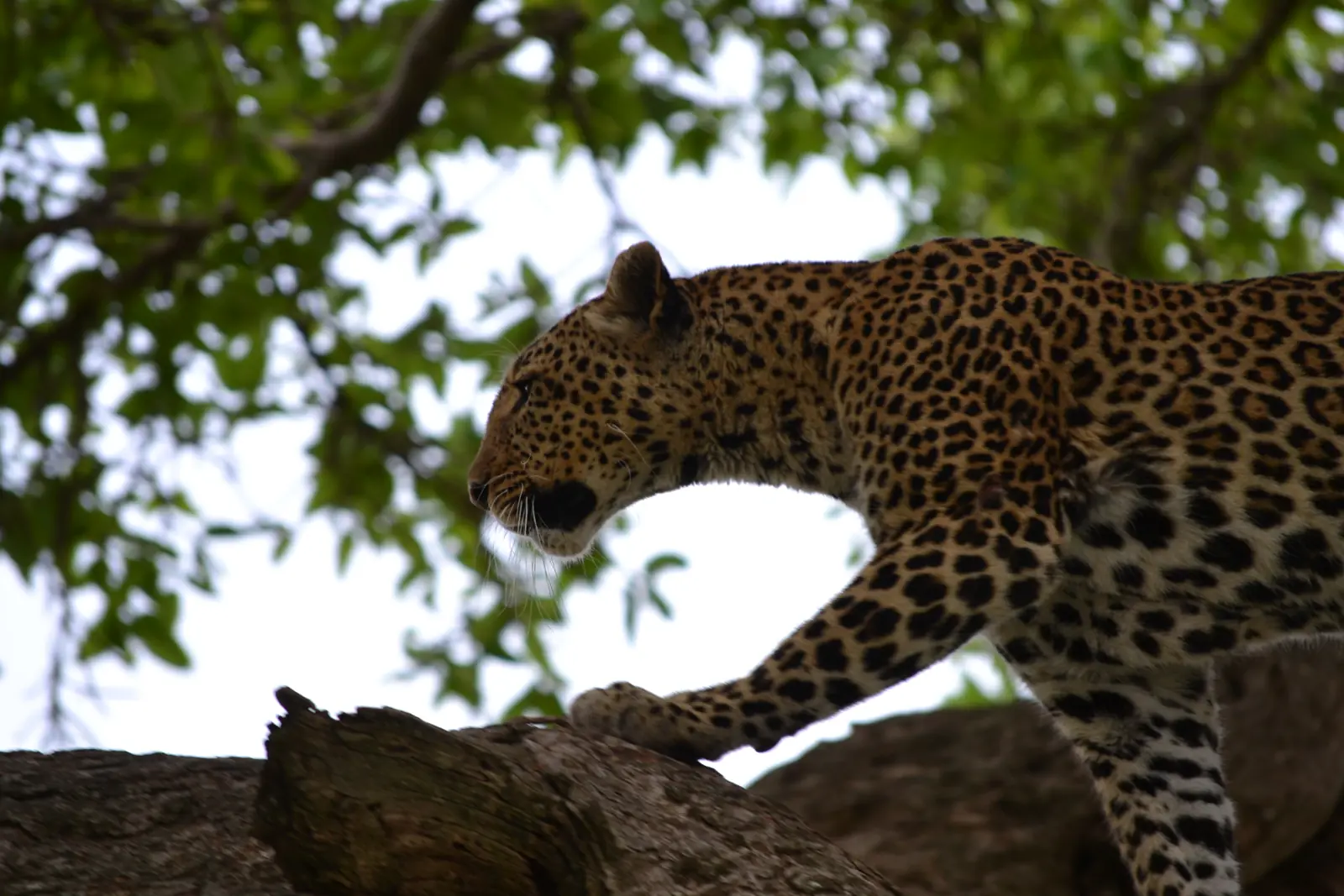
Cheetah vs Leopard
Cheetah or leopard? The quick ways to tell these spotted cats apart by spots, face, body shape and behavior, with tips for finding both in Kenya.
 Planning · October 29, 2026
Luxury Safari in Kenya
What a luxury safari in Kenya really gets you: private conservancies, a private vehicle and guide, fly-in camps, and what drives the cost of a high-end trip.