
The best time to visit Kenya for a safari
We may earn a commission if you book or shop through links on this page. You choose the provider that works best for you.
Kenya's seasons at a glance
Kenya sits on the equator, so it doesn't have a hot summer and a cold winter. Instead, the year is shaped by two rainy seasons and two dry ones. Game viewing follows the water: when the bush dries out, animals crowd around rivers and waterholes and the grass is short enough to see them.
| Months | Season | What to expect |
|---|---|---|
| Jan – Feb | Short dry season | Hot, green and quieter. Great game viewing and lower prices than peak season. |
| Mar | Shoulder | Getting hotter and more humid. Rains may start late in the month. |
| Apr – May | Long rains | Heavy afternoon downpours. Some camps close, roads get muddy, prices are lowest. |
| Jun | Shoulder | Rains ending, landscapes lush. Migration herds may start arriving late in the month. |
| Jul – Oct | Long dry season | Peak season. Best wildlife viewing and the Great Migration in the Mara. Book early. |
| Nov – Dec | Short rains | Brief showers, green scenery, newborn animals and holiday-season demand around Christmas. |
When is the Great Migration in Kenya?
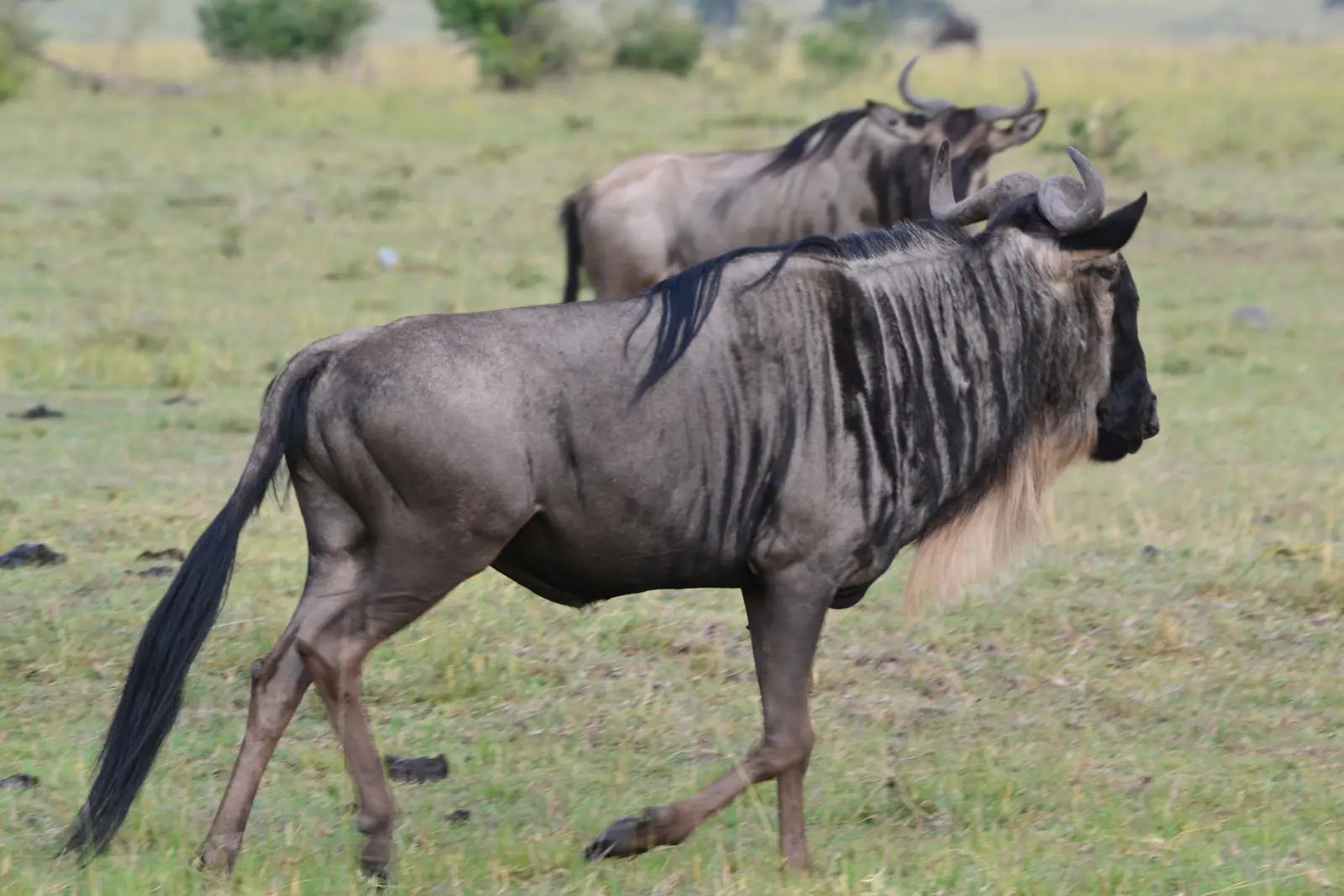
The herds of wildebeest and zebra usually cross from Tanzania's Serengeti into the Maasai Mara around July and stay until about October. The dramatic Mara River crossings tend to peak in August and September. The timing shifts every year with the rains, so build a few days of flexibility into your plans. Read our full Great Migration guide for more.
The cheapest time to go
April and May are the least expensive months, and many lodges cut rates sharply. You trade lower prices for rain and some closed camps. For a good balance, look at January, February, early June and November. The weather is usually fine and prices sit below the July to October peak.
Park fees also change with the season. In the Maasai Mara National Reserve, the 2026 entry fee for non-resident adults is USD 100 per day from January to June and USD 200 per day from July to December, according to the reserve's published rates. Check the Narok County Government before you travel, as fees can change.
When we went
We traveled in June and July, right as the long rains ended. The Mara was bright green, the first wildebeest were arriving, and we had many sightings to ourselves. If you can only go once, that early dry season is hard to beat.
Ready to plan your Kenya safari?
Compare safari specialists, multi-day tour marketplaces and local experiences, then choose the one that fits how you want to travel.
Go2Africa
Work with an African safari specialist to plan a tailored itinerary, including accommodation, transfers, and experiences.
Explore Go2Africa (opens in a new tab)Safari.com
Browse safari destinations, lodges, and itineraries, then connect with a specialist to plan your trip.
Explore Safari.com (opens in a new tab)TourRadar
Compare organized multi-day safaris and tours from different operators, with itineraries and departure options to explore.
Compare safari tours (opens in a new tab)Viator
Explore game drives, day trips, and other experiences to add to your Africa itinerary. Check each listing for duration and operator details.
Explore safari experiences (opens in a new tab)Frequently asked questions
What is the best month to go on safari in Kenya?
August and September are the best months for most travelers. It's dry, wildlife is easy to spot, and the Great Migration river crossings usually peak in the Maasai Mara. July and October are close seconds.
Is it worth going to Kenya in the rainy season?
Yes, if you want lower prices and fewer vehicles. Rain usually falls in afternoon storms rather than all day. Avoid April and May if you want every camp and road open.
When is the cheapest time for a Kenya safari?
April and May, during the long rains, have the lowest lodge rates. Park fees in the Maasai Mara are also lower from January to June.
More Kenya guides
The Great Migration in Kenya: when and where to see it
When the herds reach the Mara, where the river crossings happen, and how to plan.

How much does a Kenya safari cost?
Real daily costs for budget, mid-range and luxury trips, plus park fees.
Kenya eTA: how to get your entry permit
The USD 30 entry permit, the official site, and what else to sort before you fly.